logo for bnsf - attempt 1

Safety Through Prevention

We work to operate free of accidents and injuries through safety technology, rail and bridge inspections, employee training and community partnerships

Bridge safety and inspection

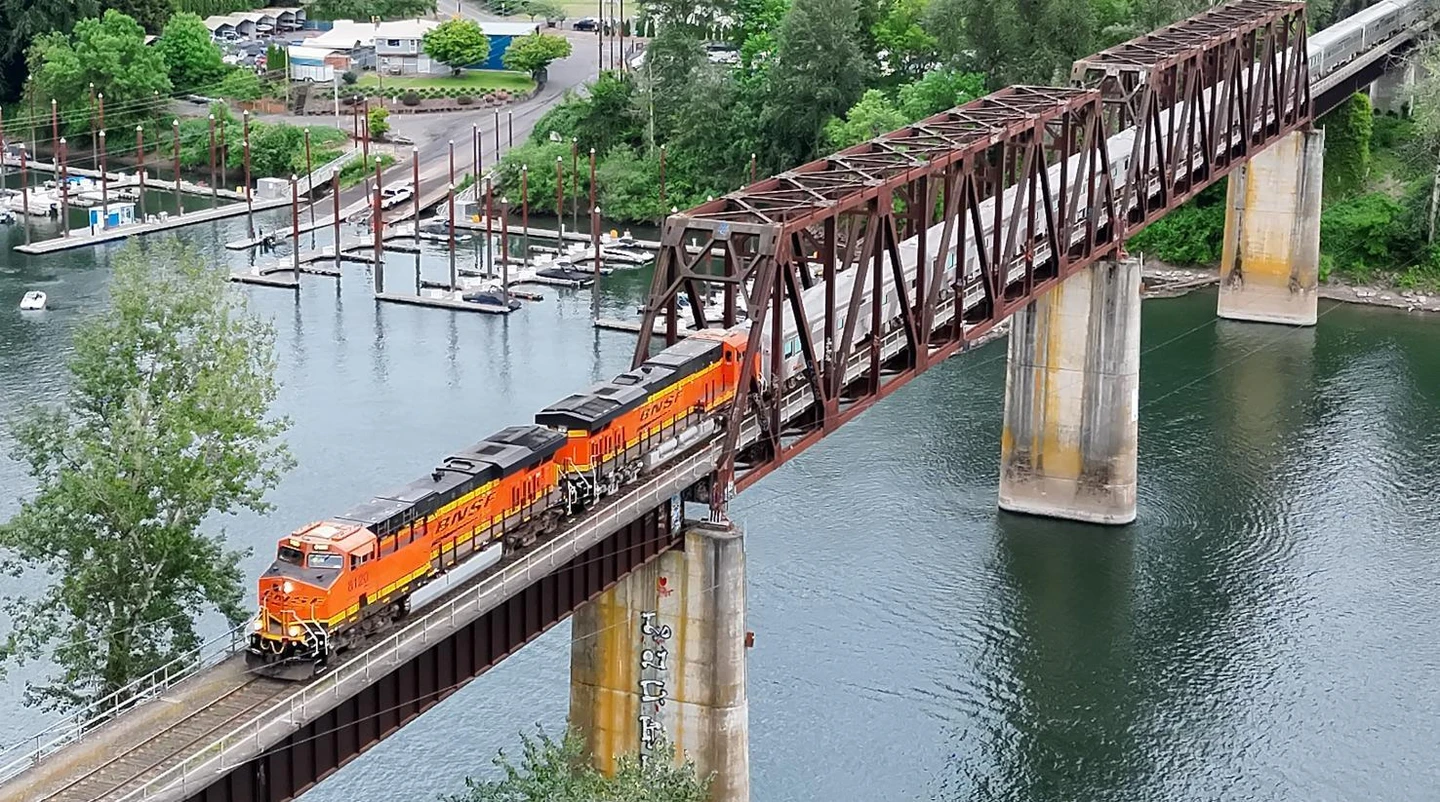
Our Bridge Management Program meets Federal Railroad Administration requirements. We inspect, maintain and repair every rail bridge on our network — and replace bridges when needed.

Comprehensive inspections

  • Cover the entire bridge structure.
  • Meet or exceed the federally required frequency.
  • Require specialized training for every BNSF bridge inspector.

Maintenance, repair and replacement

If an inspector identifies a structural defect, our engineering guidelines require immediate protective action — up to removing the bridge from service until we complete the repair. Structural defects are rare.

Supplemental inspection technology

  • Bridge inspection vehicles give crews safe access to the full structure.
  • Sonar scanning and dive teams inspect bridge foundations that sit underwater.
  • Unmanned aerial vehicles (UAVs) help us build baseline data models of bridges across the system. We continue to test tools that sharpen how we detect changes in those structures.

The FRA audits our program through document review and field verification. We inspect every bridge in service annually, with no more than 540 days between inspections.

Did you know?

We invest capital every year to maintain our network infrastructure. We also partner with federal agencies to identify the safest, most secure routes for hazardous materials.

Discover more

Safety and technical training

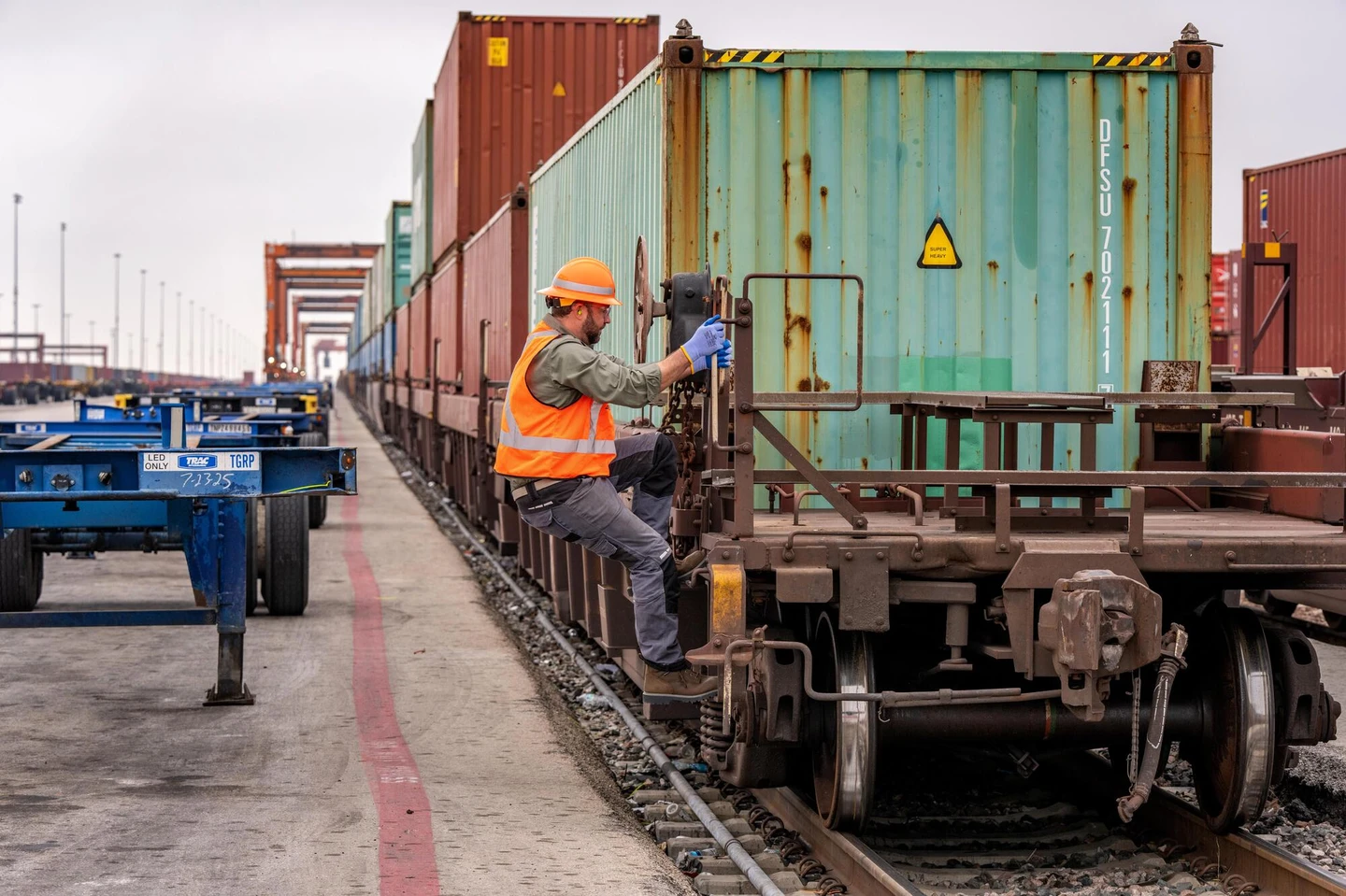
BNSF invests heavily in safety and technical training. We combine field training, on-the-job instruction and distance learning to build and sustain a professional workforce.

We centralize technical training at our Technical Training Center (TTC) in Overland Park, Kansas, located at Johnson County Community College. The center features simulations and lab equipment representing every major equipment type, including locomotive simulators, power-operated switches, grade-crossing simulators, radio and transmission networks, cranes and air brakes for freight cars and locomotives.

In 2020, TTC instructors taught more than 2,300 employees and prepared field trainers to teach employees at their own work locations. Our field training program includes mobile field trainers, instructors and maintenance-of-way instructors, who trained more than 25,000 employees in 2020 through on-site new-hire classes, rule reviews and recertification training.

Our network of 70 locomotive simulators — based at the TTC and in the field — brings distance learning to employees where they work. We customize each simulation to reflect different train types, weather, terrain and times of day.

Grade crossing safety

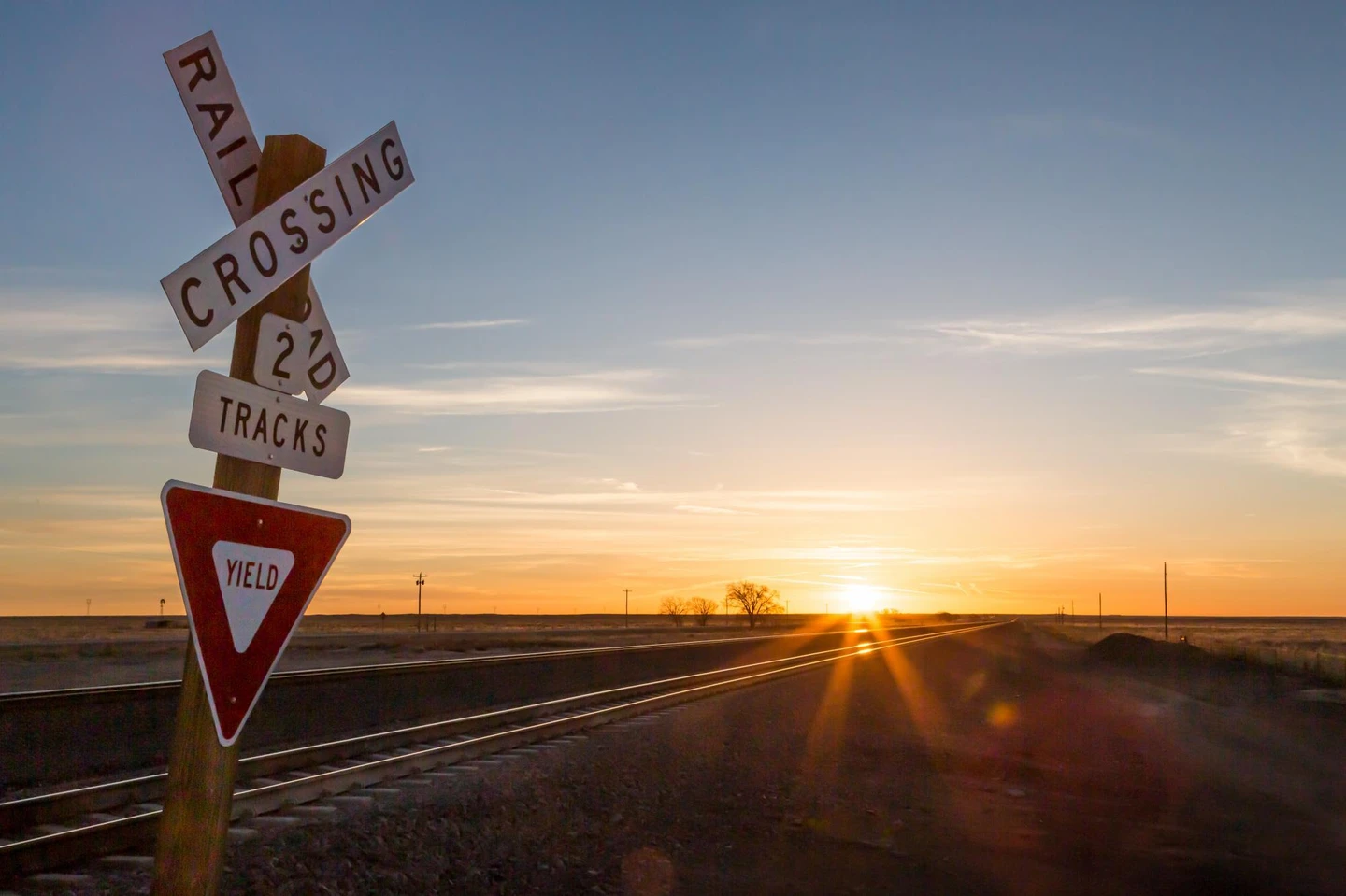
A freight train of 100 cars traveling 55 mph needs more than a mile to stop once emergency braking begins. Our network includes more than 25,000 grade crossings, so grade-crossing safety is central to our operation and our culture.

We have invested significantly in grade-crossing maintenance, improvements and safety programs. Our work includes:

  • Community education and awareness
  • Train crew education and testing
  • Crossing closures
  • New safety technology
  • Vegetation control
  • Track and signal inspection and maintenance

Positive train control (PTC)

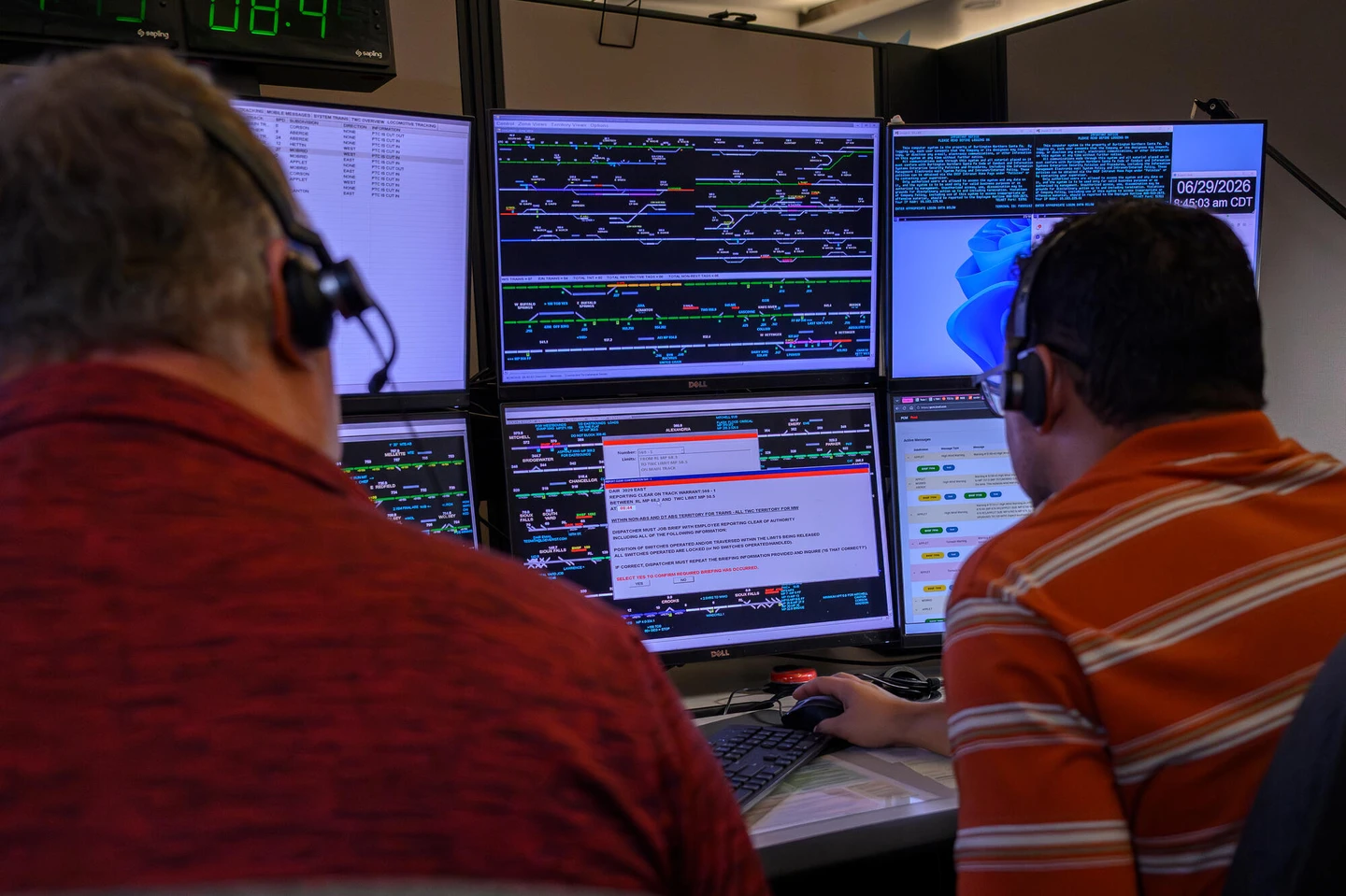
BNSF has installed all mandated positive train control (PTC) infrastructure across our network. We operate trains with PTC protections on every mandated line while we continue to test and refine this complex system.

Train horns and quiet zones

Why crews sound the horn

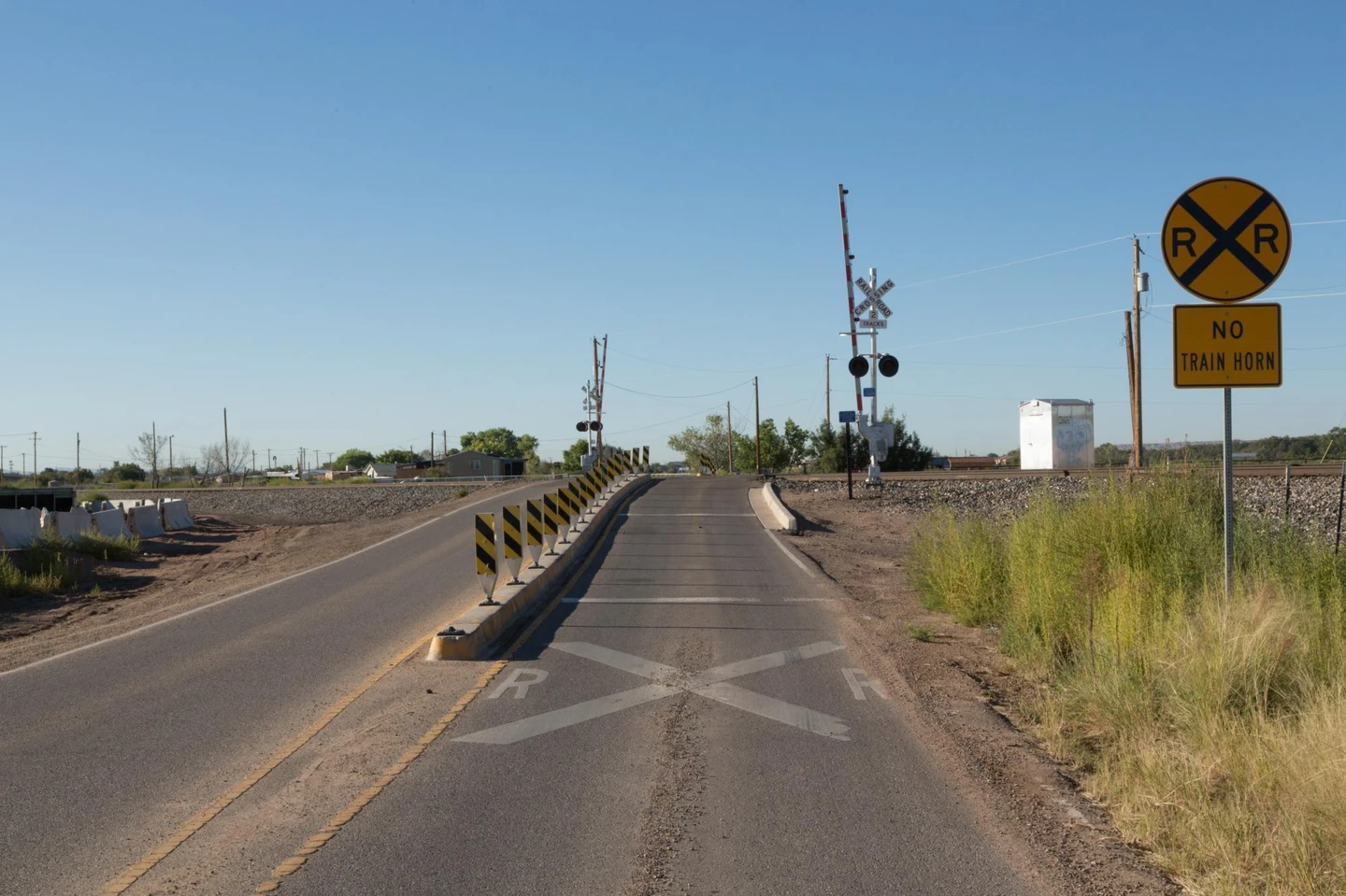
Federal law requires train crews to sound the horn at every public crossing to protect motorists and pedestrians — even at crossings with gates and lights. Only crossings that meet Federal Railroad Administration (FRA) criteria for a quiet zone are exempt.

A crew may also sound the horn when:

  • A vehicle, person or animal is on or near the track and the crew determines a warning is appropriate.
  • Track or construction workers are within 25 feet of a live track, or another emergency occurs.

Federal rules require train horns to sound between 96–110 decibels. The FRA can fine a train crew for failing to sound the horn adequately, and both BNSF management and the FRA spot-check crews for compliance.

How communities can reduce train horns

A community that wants to reduce train horn noise may apply for a quiet zone — a stretch of track where the railroad does not automatically sound the horn at each crossing, except in emergencies or during track work within 25 feet of a live track.

Communities can also reduce train horns by:

  • Closing unnecessary crossings
  • Building overpasses or underpasses

We work with communities that want to close crossings and reduce risk to the public. We also partner with Operation Lifesaver to teach the public how to stay safe around trains.

TRANSCAER® National Achievement Award

BNSF has earned the TRANSCAER® (Transportation Community Awareness and Emergency Response) National Achievement Award more than 20 times since 1998 for excellence in hazardous materials training and community safety.

The award committee — which includes the American Chemistry Council, the Association of American Railroads (AAR), National Tank Truck Carriers and the Chlorine Institute — recognizes the TRANSCAER® partner or company that does the most to help communities prepare for hazardous materials emergencies.

Shippers have also honored BNSF with transportation achievement awards recognizing our performance as a carrier.

Responsible Care® framework

The Responsible Care® framework reinforces our commitment to safer operations. We map our business processes to the Responsible Care Code of Management Practices.

Guiding Principles

Responsible Care® is built on a series of 10 Guiding Principles that encompass the philosophy and commitment of each Chemical Manufacturers Association member and partner.

  1. To recognize and respond to community concerns about chemicals and our operations
  2. To develop and produce chemicals that can be manufactured, transported, used and disposed of safely
  3. To make health, safety and environmental considerations a priority in our planning for all existing and new products and processes
  4. To report promptly to officials, employees, customers and the public, information on chemical-related health or environmental hazards and to recommend protective measures
  5. To counsel customers on the safe use, transportation and disposal of chemical products
  6. To operate our plants and facilities in a manner that protects the environment, the health and safety of our employees and the public
  7. To extend knowledge by conducting or supporting research on the health, safety and environmental effects of our products, processes and waste materials
  8. To work with others to resolve problems created by past handling and disposal of hazardous substances
  9. To participate with government and others in creating responsible laws, regulations and standards to safeguard the community, workplace and environment
  10. To promote the principles and practices of Responsible Care® by sharing experiences and offering assistance to others who produce, handle, use, transport or dispose of chemicals
Code of Management Practice interpretations

Process Safety

BNSF is in business to move products from point A to point B. To do this safely and economically, BNSF must consider: service design; physical plant; route structure; rolling stock maintenance and safety; and employee training in safety, operations, maintenance, regulatory compliance, and environmental areas. All processes affecting the safe execution and delivery of BNSF services are included in the Process Safety Code.

Chemical Producer

BNSF Railway

Concerns everything inside of the plant (from design to maintenance) to prevent accidents

Concerns the processes used in delivering the service without accident

Product Stewardship

As a service provider, BNSF does not have a product to manage; however, we do work with a number of companies in the transport of products and should extend our knowledge to these companies. BNSF will use Product Stewardship to identify all areas that impact the movement of a railcar and work on methods to improve the safety of the entire transportation cycle. These areas include receiving proper billing, Electronic Data Interchange, helping customers load and secure cars, adherence to trip plan, and interaction with connecting railroads or other transportation modes.

Chemical Producer

BNSF Railway

Management of product from cradle to grave

Customer service and interline partners

Pollution Prevention

The Pollution Prevention Code supports the strong environmental initiatives we already have in place at BNSF. This code documents the improvements BNSF has made in the area of pollution prevention. One of the highlights of the BNSF Pollution Prevention process is the Pollution Prevention (P2) Teams that have been implemented at various locations across our system. Where P2 Teams have been implemented, significant reductions in generated waste have been observed and recorded.  

Chemical Producer

BNSF Railway

How to prevent emissions and reduce long term pollution from products

Concerns the processes used in delivering the service without accident

Community Awareness & Emergency Response (CAER)

The Community Awareness and Emergency Response Code supports a number of Evidences of Success in the BNSF Vision Statement. This Code underscores the numerous efforts BNSF already has put in place to effectively work with the communities with which we interact.

BNSF believes that vigorous support of corporate-wide programs, like TRANSCAER and Operation Lifesaver, and location specific outreach programs, such as Adopt-a-School, are very important in improving public awareness and safety around not only BNSF, but all railroads.

While we do not want to have to call on them, BNSF has an extensive network of emergency responders trained and capable of handling all types of releases. In addition, BNSF is pursuing and piloting the latest in technology to help us respond more quickly and accurately to an emergency; the Spill Response Geographical Information System.

Chemical Producer

BNSF Railway

Work with individual LEPCs and develop community right-to-know

Work with TRANSCAER and individual LEPCs.

Distribution Code

The Distribution Code was written to manage and reduce the risk of transporting chemicals. We interpret this code to apply when we contract for transportation services and for internal movement of hazardous material. 

BNSF hires a number of third parties to perform distribution services, e.g., bulk tank truck companies, container drayage and material delivery. These contractors and their associated risk and safety assessments fall under this code. In addition, BNSF has numerous internal hazardous material movements that will be governed by this code.

Chemical Producer

BNSF Railway

Assess carriers’ safety and risk. Work with TRANSCAER to further safety.

Assess contract carriers’ and contractors’ safety and risk. Complete assessment of internal movements.

Health & Safety

The Employee Health and Safety Code supports a number of Evidences of Success in the BNSF Vision Statement. The code underscores the strong effort BNSF has placed on improving the safety of employees and their work environment. 

BNSF has seen significant reductions in employee injuries. Continued emphasis in this area will result in further improvement to our employees' safety.

Chemical Producer

BNSF Railway

Improve work environment to reduce employee injuries

Improve work environment to reduce employee injuries

Spill response geographic information system

BNSF has partnered with Radian International to develop developed a Spill Response Geographical Information System (SRGIS). BNSF is taking a leadership position with the transportation community, the public, chemical shippers and regulatory agencies to provide quicker and more effective emergency response capabilities.

Features

  • A system based upon personal computer technology with easy to use graphical user interface.
  • The user will be able to locate points of interest by either pointing to a location on a map or entering a division and milepost.
  • Immediate access to procedures based upon:
    • The substance and quantity spilled
    • Regulatory requirements
    • BNSF policies
    • Guidance from shippers
    • Public relations
  • Immediate access to information concerning the railroad infrastructure at the site of the spill.
  • Immediate access to information concerning the demographics of the surroundings within +/- 2.5 miles of the right-of-way, such as population density, rivers and streams, roads, sensitive receptors, etc.
  • Immediate access to points of contact for response support, including cognizant railroad employees, fire departments, EMS, local law enforcement, etc.
  • Immediate information access to over 10,500 hazardous materials.
  • Inclusion of an air dispersion model.
  • In the future, ability to incorporate risk models such as the Association of American Railroads (AAR) Quantitative Risk Model.

Benefits

  • Allows rapid location of incidents
  • Improves spill response efficiency
  • Users will be able to obtain immediate access to:
    • Information concerning the railroad infrastructure at the site of the spill.
    • Demographics of the surroundings within +/- 2.5 miles of the right of way, such as population density, rivers and streams, roads, sensitive receptors, etc.
    • Points of contact for response support, including cognizant railroad employees, fire departments, EMS, local law enforcement, etc.
    • Information about over 10,500 hazardous materials.

Next: Mitigation

See how we collaborate with employees and empower them to drive safety initiatives.